


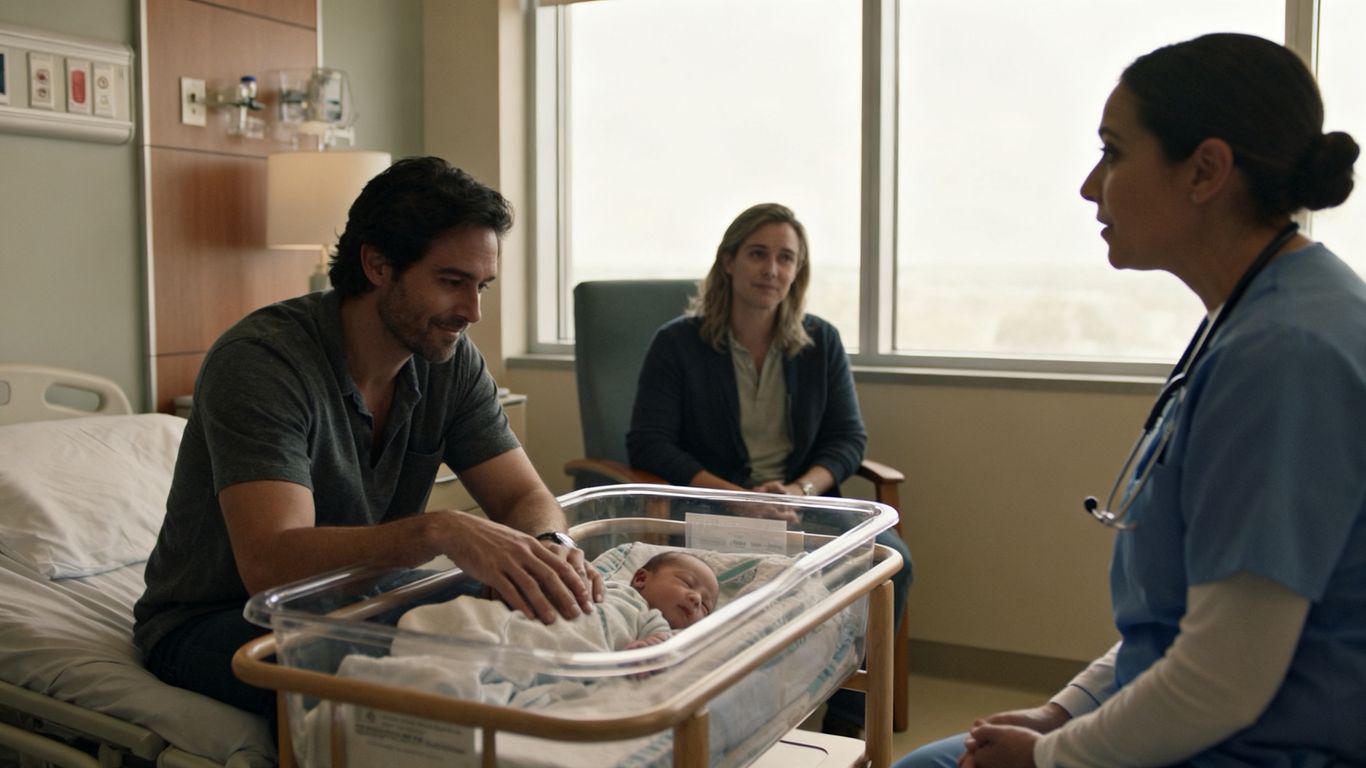
A difficult birth or a serious diagnosis can leave families searching for an explanation. In general, a birth injury malpractice claim asks whether the care team had a legal duty, failed to meet the applicable standard of care, and caused harm through that failure. The precise rules and proof required depend on the state and the facts. An overview of medical negligence and birth injury can provide background, but it cannot determine whether a particular case meets the legal test.
How a provider’s duty of care is established
A provider’s duty generally arises when a clinician or facility agrees to provide care to a patient. The nature of that relationship helps define what responsibilities applied during prenatal visits, labor, delivery, or newborn care. Different clinicians may have different duties based on their roles and involvement. The question is not simply whether a provider was present, but whether that provider had responsibility for the care at issue.
What it means to fall below the accepted standard of care
The standard of care is generally assessed by asking what a reasonably careful provider with similar training would have done in comparable circumstances. It is not a guarantee of a perfect outcome, nor does it require every clinician to make the same choice. An expert may consider what information was available at the time, how quickly the situation changed, and whether the response was clinically reasonable. A concerning outcome alone does not establish a breach; the care itself must be evaluated against professional standards.
How the breach must be linked to the injury
A claim also requires a connection between the alleged mistake and the injury. It is not enough to show that a provider made an error and that a child was later diagnosed with a condition; evidence must support that the error caused or contributed to the harm under the applicable state law. Timing can matter, as can the child’s condition before, during, and after delivery. This causal link is often one of the most contested parts of a case.
Why measurable harm is part of a malpractice claim
A malpractice claim generally must involve harm that can be documented, not only a departure from the standard of care. The effects may include medical needs, developmental support, or other losses, but their nature and extent vary from child to child. Records and professional assessments can help show what care is needed and how the injury affects daily life. Documented impact matters because it gives the legal and medical review a clearer basis for assessing the consequences.
Situations that may warrant a closer review
Some events during pregnancy, labor, or delivery can raise questions about whether care was timely and appropriate. They do not, by themselves, establish negligence; the circumstances and the medical record still need careful review. Families may find it helpful to understand examples of birth injury claims while keeping in mind that each situation is different. The following scenarios are reasons to ask questions, not conclusions about fault.
Delayed responses to signs of fetal distress
Changes in a fetal heart-rate pattern or other signs of distress may call for assessment and a response based on the full clinical picture. A closer review may consider when the signs appeared, whether they persisted, what the care team documented, and what steps followed. Some patterns resolve or have more than one possible explanation, so a single monitor reading does not settle the issue. The relevant question is whether the team recognized and responded to the information reasonably available at the time.
Delays in performing a cesarean or other urgent delivery
When an urgent delivery is considered, reviewers may examine the reasons for the decision, the degree of urgency, and the time taken to act. They may also look at whether the clinical situation changed while preparations were underway and whether those changes were communicated. A delay is not automatically negligent: clinical circumstances, staffing, and the feasibility of different options may all matter. The timeline and the decisions made along the way help explain whether the response was appropriate.
Improper use of forceps, vacuum extraction, or other techniques
Assisted delivery methods may be used for clinical reasons, but the circumstances and technique are important to evaluating a possible injury. Reviewers may consider whether the method was appropriate, whether it was applied as intended, and whether there were signs that another approach should be considered. They may also assess whether the injury is consistent with the proposed mechanism. The presence of an injury after an assisted delivery does not by itself prove that the technique was used improperly.
Medication errors or failures to manage maternal conditions
Medication dose, timing, and monitoring can be relevant when evaluating care during pregnancy or labor. So can a response to a maternal condition that may affect the parent or baby. A review may ask whether the condition was recognized, whether appropriate steps were taken, and whether the medication or management decision contributed to harm. These questions depend on the patient’s circumstances and the information available to the clinicians at the time.
Missed opportunities to diagnose or treat an infection
Some infections can create risks for a pregnant patient or newborn, making recognition and treatment important. A review may examine symptoms, test results, the timing of diagnosis, and whether the care team took reasonable steps in response. It may also consider whether an infection was present early enough for a different response to change the outcome. A missed diagnosis can matter legally only if the evidence supports a connection to measurable harm.
Why an injury alone does not prove malpractice
Birth injuries have many possible causes, and not every complication can be prevented. A legal assessment must distinguish an adverse outcome from care that fell below the applicable standard and caused harm. That distinction can be difficult for families to make from an outcome or a short explanation alone. Careful review looks at the full clinical context rather than assuming either that a provider is at fault or that nothing went wrong.
Complications that can occur despite appropriate care
Labor and delivery can change quickly, and some complications may occur even when clinicians act appropriately. A poor outcome does not automatically show that someone made a negligent decision, just as a good outcome does not prove every decision was sound. Reviewers consider whether the care was reasonable based on what was known at the time, not only what became clear afterward. This avoids judging a decision solely with hindsight.
The role of congenital conditions and prenatal factors
A child’s condition may be affected by factors that began before labor or are unrelated to delivery care. These can include congenital conditions, prenatal events, or other medical issues. A review may compare prenatal records and later findings to assess whether a condition likely arose during birth or had another cause. This context is essential: the timing of a diagnosis does not necessarily establish when or why the underlying condition developed.
How reasonable clinical judgment may affect the assessment
More than one approach may be medically reasonable in a changing situation. A clinician’s decision is generally assessed in light of the options, risks, and information available at that moment. Experts may disagree about whether a different course was required, especially when records leave questions unanswered. The assessment focuses on whether the chosen care was within accepted professional standards, rather than whether another option might also have been possible.
Evidence used to evaluate a possible claim
A possible claim is assessed through records and other evidence that help reconstruct events and their consequences. No single document usually tells the whole story; entries may need to be compared across the prenatal period, labor, delivery, and newborn care. The record can clarify what the team knew and when, while expert review may address questions that are not apparent from the paperwork. The aim is to understand both the care provided and the injury’s likely causes.
What prenatal, labor, and delivery records can show
Medical records can document symptoms, assessments, treatment decisions, and communications among members of the care team. Families may ask how the following materials could help provide a fuller account:
- Prenatal visit notes and relevant test results
- Labor and delivery notes, including documented decisions
- Medication records and nursing observations
- Newborn records, diagnostic testing, and follow-up assessments
These materials can reveal gaps or changing circumstances, but an incomplete entry does not automatically prove that care was negligent. Records are most useful when considered together and reviewed alongside the events they describe. Families should preserve copies and avoid altering original documents.
How fetal monitoring and test results help establish a timeline
Monitoring strips, laboratory results, imaging, and other tests can help establish when a concern arose and how it changed. Their meaning depends on the clinical context and the way results were interpreted by the care team. A reviewer may compare test times with notes about calls, decisions, interventions, and the child’s condition after birth. That sequence can help assess whether a response was timely and whether an alleged delay could have affected the outcome.
Why medical experts compare care with professional standards
Medical experts can explain whether care aligned with professional standards and whether a specific departure likely contributed to harm. The expert’s review may focus on the relevant specialty and the circumstances at issue, rather than on a broad judgment about the entire birth experience. Legal rules differ by state, and some jurisdictions require particular expert opinions or procedural steps. An independent assessment can help separate a medically concerning event from a legally supportable claim.
How alternative causes and long-term effects are assessed
A review may consider other explanations for the child’s condition, including prenatal factors or complications that can occur without negligence. It may also examine the child’s current needs and whether further evaluation is appropriate to understand possible long-term effects. Medical opinions can change as a child grows and more information becomes available. Careful assessment avoids treating an early diagnosis as a complete forecast of the child’s future.
Who may be responsible for negligent care
Responsibility depends on who provided the relevant care, what decisions were made, and the legal relationship between the people and organizations involved. A birth may involve several clinicians, each with a distinct role and separate responsibilities. A facility can also be relevant, though it is not automatically liable for every action by a clinician working there. The facts and state law determine which parties may be considered.
The roles of obstetricians, nurses, and other clinicians
Obstetricians, nurses, anesthesiologists, midwives, and newborn-care clinicians may each contribute to different parts of a patient’s care. A review may consider what each person observed, documented, communicated, or decided. It may also ask whether a clinician had the authority and opportunity to respond to a concern. Being part of the care team does not by itself establish individual responsibility.
When a hospital or medical practice may share responsibility
A hospital or medical practice may be considered when its own conduct is relevant, such as policies, staffing, equipment, or administrative decisions. Its legal responsibility may also depend on the employment or agency relationship with the clinician involved. The rules differ across jurisdictions and circumstances, so a provider’s presence at a facility does not alone answer who may be liable. Legal review can help identify which relationships and actions need closer examination.
How multiple providers’ decisions can factor into a claim
A sequence of decisions by different providers may contribute to the outcome. For example, one clinician may identify a concern, another may receive the report, and a third may decide what intervention to take. Reviewers can examine whether communication was clear and whether each person acted reasonably within their responsibilities. Where several decisions are involved, the analysis should distinguish each role rather than treating the care team as a single actor.
Steps families can take after suspecting malpractice
Families who have questions about a child’s birth or diagnosis may find it useful to proceed methodically. The first priority is the child’s health and ongoing care; a legal review can take place alongside that care. Records, independent opinions, and local legal requirements may all affect what options are available. No single step can establish a claim, but organized information can make an initial assessment more useful.
Requesting and preserving relevant medical records
Families can ask the hospital, medical practice, and other providers for copies of records related to pregnancy, labor, delivery, and the child’s care. Requests may need to follow the provider’s process, and access rules can vary by state and by the patient’s age. Keeping records in their original form and noting where each set came from can make later review easier. If information appears missing or unclear, families can ask the provider how to request additional materials.
Seeking an independent medical and legal review
An independent medical review can help explain the child’s condition and whether the care raises questions that merit further investigation. A lawyer familiar with medical malpractice can assess legal standards, potential defendants, and procedural requirements in the relevant state. Families may wish to prepare a timeline and collect questions before speaking with either professional. A review is not a guarantee that a claim exists, but it can help clarify what is known and what remains uncertain.
Understanding state deadlines and special notice requirements
Deadlines for filing a malpractice claim vary by state and may depend on the patient’s age, when the injury was discovered, and other legal rules. Some cases also involve advance notice, expert certification, or special rules for claims involving public entities. Because missing a deadline can affect legal rights, families should not rely on a general online summary to calculate one. Prompt advice from a lawyer licensed in the relevant state can help identify which rules may apply.
Considering the child’s ongoing care and documented losses
A child’s needs may evolve, so families can keep organized records of care, evaluations, and expenses as they arise. These materials can help clinicians coordinate support and may also assist a legal review in understanding the effects of an injury. Families should avoid assuming that every future need or expense will be legally recoverable; that depends on the evidence and applicable law. The immediate focus remains appropriate care for the child and a clear record of what that care involves.
